If you’ve experienced the distinctive shooting pain of sciatica – running from the lower back through the buttock and down into the leg – you know how debilitating it can be. For Seven Hills residents dealing with this condition, effective chiropractic treatment is available close to home. Understanding what sciatica is, what causes it, and how it’s treated can help you take the right steps toward recovery.
What Sciatica Feels Like
Sciatica describes the set of symptoms that arise when the sciatic nerve – the body’s largest nerve – is compressed or irritated somewhere along its course from the lower spine to the foot. The most recognisable symptom is pain that radiates from the lower back or buttock down the back of the thigh and into the calf or foot. This pain can range from a dull, persistent ache to sharp, burning, or electric sensations.
Alongside pain, many people experience tingling or pins and needles in the leg, numbness in areas of the foot or lower leg, and in more significant cases, weakness in the affected leg muscles. Symptoms are typically present on one side of the body and are often aggravated by sitting, bending forward, or activities that increase pressure on the lumbar spine.
Causes Relevant to the Seven Hills Community
In the Seven Hills and Blacktown area, the causes of sciatica reflect the local demographic. For physical workers – in warehousing, transport, construction, and the trades – lumbar disc herniations from repetitive heavy lifting are among the most common drivers of sciatic symptoms. The L4/5 and L5/S1 disc levels are most frequently involved, as they bear the greatest load during lifting movements.
For office workers and long-distance drivers, prolonged sitting places sustained compressive load on the lower lumbar discs and can gradually promote disc bulging that irritates adjacent nerve roots. Piriformis syndrome — where the piriformis muscle in the deep buttock compresses the sciatic nerve – is particularly common in people who sit for extended periods or drive regularly.
Degenerative changes in the lower spine, which are a natural part of ageing but can be accelerated by years of physical work, can also contribute to nerve root irritation through narrowing of the foraminal spaces.
Chiropractic Assessment and Treatment
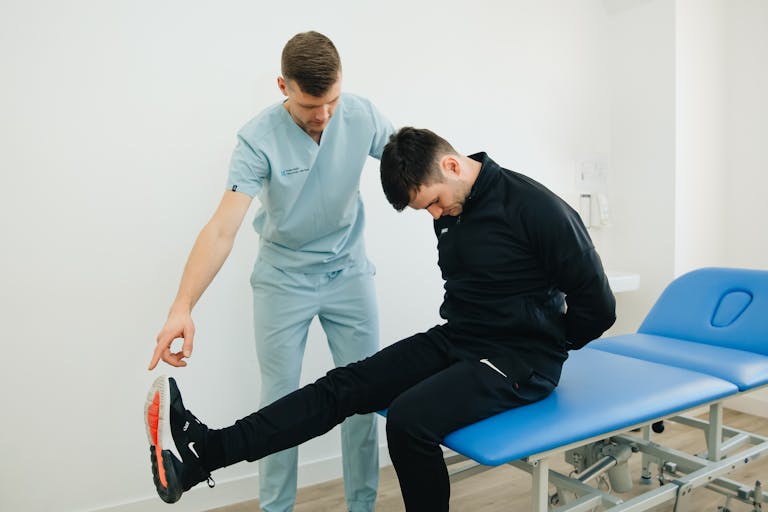
When you come in to our Seven Hills clinic with sciatic symptoms, the assessment begins with a thorough history to understand when your symptoms started, what aggravates and relieves them, whether you’ve had similar episodes before, and how your daily activities are affected. A neurological examination assesses the specific nerve root involved and rules out more serious pathology.
Treatment for sciatica is tailored to the underlying cause. For disc-related presentations, gentle lumbar mobilisation and specific adjustment techniques reduce pressure on the affected nerve root and restore normal movement to the lumbar spine. Soft tissue work addresses the muscular guarding and pelvic tightness that inevitably develop in response to nerve irritation. Specific exercises are introduced to support disc recovery and reduce the risk of recurrence.
For piriformis-related presentations, treatment focuses on releasing the deep gluteal musculature, correcting any sacroiliac joint dysfunction, and addressing hip flexibility and strength imbalances.
When to Act
Sciatica that has been present for more than two to three weeks, or that is causing significant functional limitation, warrants professional assessment. If you develop sudden weakness in the leg, or any loss of bladder or bowel control, seek urgent medical attention immediately.
Our team at our Seven Hills clinic treats sciatica regularly and understands the impact it has on work and daily life. Book online or call (02) 9838 7773 – we’re at 188 Prospect Highway, Seven Hills.